Five Ideas for the Future of Portland's Freeways
The city that removed a waterfront freeway in the 1970s has barely touched its road map since. Five proposals for what comes next, from sensible to shameless.
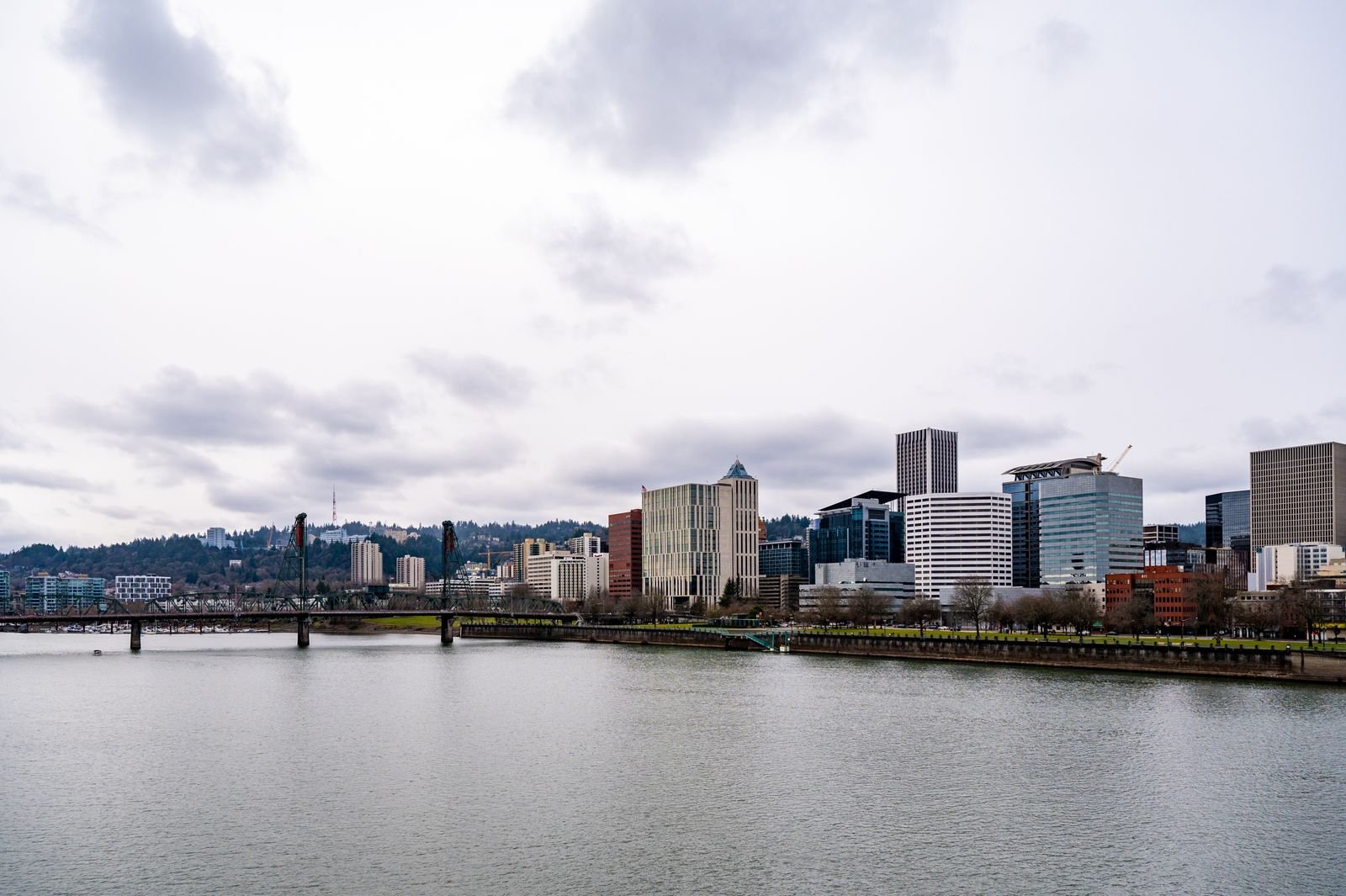
Here is a number I am sure of: zero. That is how many new freeways Portland has finished since Interstate 205 opened end to end in 1983. For a city that talks about transportation as much as this one does, the freeway map has been remarkably still for four decades.
The stillness was earned. In the late 1960s and 1970s, Portlanders turned against a road plan that traced back to Robert Moses, who had been brought in during the war to tell the city where its expressways should go. By then that thinking had already produced I-5, the Banfield (now I-84), I-405 and the Sunset Highway, and I have written separately about the neighborhoods that were cut up to make room.
You can argue those roads were needed. The next round would have been much worse. Picture a Laurelhurst Freeway, a Sellwood Freeway and the Mount Hood Freeway all carving through Southeast, and you have a rough idea of what was on the table.
The precedent everyone forgets is a precedent
What turned the tide was Harbor Drive. It was the old expressway along the west bank downtown, and once the east bank alignment of I-5 and the Fremont Bridge route existed, it was plainly redundant. The fight to get rid of it, which started in the late 1960s, was comparatively easy. The road closed in 1974, and the grass you sit on at the Blues Festival is where it used to be. I walked through the before and after in Portland Then and Now: The Downtown Waterfront.
That win gave the anti freeway side its confidence. The Mount Hood Freeway died. The others died. Only I-205 got through, and it was trimmed down to leave room for a transit corridor and a bike path. That turned out to be shrewd, since MAX trains run on that corridor today.
My point is this. Portland has already removed a freeway, the sky did not fall, and the result is the most used public space in the city. We treat that as a charming bit of history. I think we should treat it as a method.
Since 1983, most of the official attention has gone to the Interstate Bridge over the Columbia, the pair of aging lift spans that produce the only stoplight on I-5 between Canada and Mexico whenever a tall boat comes through. A replacement has been planned, cancelled, and planned again. Beyond that there is very little concrete on the drawing board, in either sense. So, in a neighborly spirit, here are five ideas.
1. Bury the Marquam Bridge
I have said before that the Marquam, opened in 1966, is the ugliest large object in Portland. The double decked span is bad. The approach ramps are worse.
But looks are the weaker half of the argument. The real cost is land. On the west side, the Marquam ramps and the I-405 interchange sit on a wide piece of riverfront and form a thick barrier between downtown and the South Waterfront. Walk from PSU to the tram terminal sometime and count the overpasses above your head.
A tunnel under the Willamette would take I-5 off the skyline and hand back acres on both banks.
- For: enormous gain in usable riverfront, and a seismic upgrade for a crossing that needs one.
- Against: tunnels under rivers are about the most expensive thing a highway department can build, and this one would have to tie into three other freeways.
I rate it desirable and unlikely, which is a category Portland knows well.
2. Remove the Eastside Freeway
There is a cheaper way to be rid of the Marquam: take out the whole east bank stretch of I-5 from the Marquam to the Fremont Bridge and send through traffic around the west side on I-405.
Stand in Waterfront Park and look across the water. The east bank ought to be the city’s second front porch. Instead it is a shelf of elevated concrete with the Eastbank Esplanade tucked bravely underneath. Remove the freeway and the Central Eastside gets its river back.
The catch is honest and large. I-405 is a trench with no room to widen. It has spare capacity at many hours of the day, and none at the hours that matter. To make this work you would need to push long distance traffic out to I-205 with better signs and probably a wider road out there. That means the people of Lents and Maywood Park get more traffic so that the inner city can have a nicer view, and they have already been asked to take that deal once.
3. Cap I-405
This is the sensible one. Mayor Vera Katz pushed it in the 1990s: build lids across the sunken freeway and put city back on top. The plan talked of recovering most of the three dozen or so blocks lost to the trench.
It works because the engineers of the 1960s accidentally did us a favor. I-405 is already below grade, with cross streets bridging it every block or two. Filling in the gaps between those bridges is a far smaller job than moving a freeway. Seattle did something similar with Freeway Park over its own I-5 back in the 1970s, and it remains a strange and lovely place to eat lunch.
Cost is the obvious objection, and it is substantial. But there is a way to share it: let developers pay for a cap in return for the right to build on it. Land beside downtown does not come up for sale often. Land that does not yet exist ought to be worth something.
If I could fund one item on this list, this is it. Start with a single block between Goose Hollow and downtown and see who complains.
4. The 405 Grand Canal
I did not think of this one, and I wish I had. Suppose the day comes when I-405 is no longer needed. It is a trench, it sits at the foot of the West Hills, and water already wants to run that way. So fill it. With water.
Think of the waterfront property. Think of the gondolas in the Pearl District. Think of the meetings.
I include it partly as a joke and partly as a reminder that a freeway trench is just a shape in the ground. What goes in it is a choice.
5. The nuclear option
Last, the pipe dream. Over a generation or two, retire both I-5 and I-405 through the central city. Build up I-205 and the Glenn Jackson Bridge to carry everything running north and south, and declare inner Portland nearly freeway free.
Albina stitched back together. No trench west of downtown. No shelf on the east bank. MAX and the streetcar extended to do the local work.
It will almost certainly never happen, and the fairness problem from idea two applies here at ten times the scale. Still, I find it a useful exercise. Once you have imagined the whole thing gone, a few freeway caps start to look like a very modest request.
Where I come down
Cap first, because it harms no one and repairs a lot. Study the east bank removal seriously, with the outer neighborhoods in the room this time. Keep the tunnel as a long term ambition, and keep the canal for dinner parties.
Portland’s reputation rests on a decision it made half a century ago to give a road back to the river. It has been living off that story ever since. I would like to see it write another chapter before the Marquam turns a hundred.
- portland
- freeways
- i-405
- marquam bridge
- harbor drive
- urban planning
- waterfront park
- opinion