Five of Portland's Biggest Mistakes
Portland gets more right than wrong, but the Marquam Bridge, a demolished grand hotel and a broken chain of parks still sting.
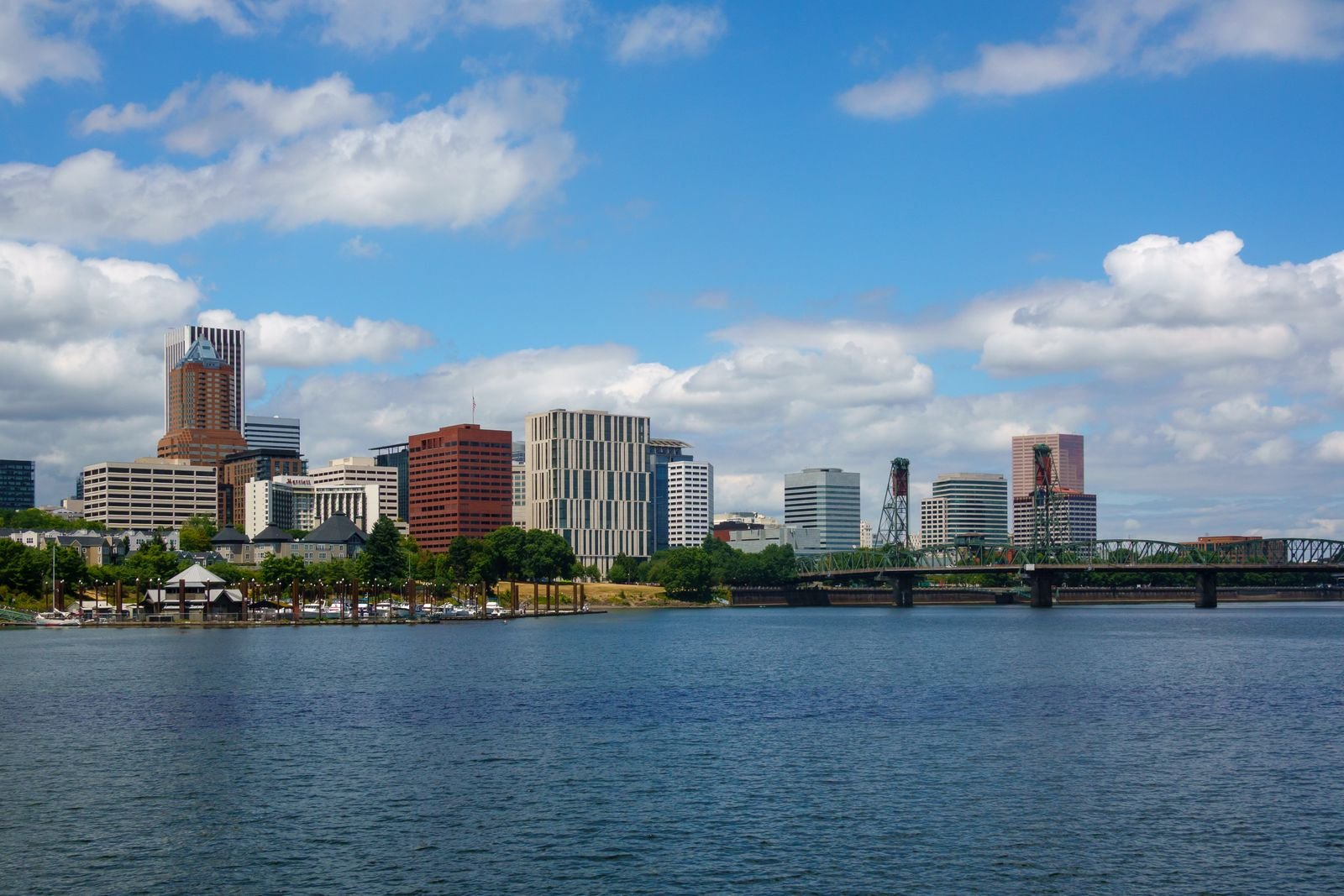
I love this city, and I will argue with anyone that Portland has made more good calls than bad ones. Keeping the 200-foot blocks. Tearing out Harbor Drive. Saying no to the Mount Hood Freeway.
But no city bats a thousand, and ours has a few decisions that still make me wince every time I walk past the evidence. Here are five of them, in no particular order of regret.
1. The Marquam Bridge
Ask a Portlander which structure they would most like to see dynamited and the answer comes back fast. The Marquam opened in 1966 to carry Interstate 5 over the Willamette, and the state highway department built it the way you would build a loading dock: cheap, quick, and with no thought for who had to look at it.
The Portland Art Commission was appalled enough to file a formal protest. That complaint did some good. When the next freeway crossing came along, the commission got a seat at the table, and the result was the Fremont Bridge, which cost far more and looks it.
In fairness, the main span is not the real offender. It is a plain double-deck truss, economical and no worse than a lot of mid-century steel. The damage is in the approaches:
- On the east bank the ramps run for more than half a mile, a stack of concrete that seals the inner eastside off from its own river.
- From Waterfront Park and much of downtown, they sit squarely in front of Mt. Hood.
- Underneath, the Eastbank Esplanade does its best, but you are still walking in the shade and roar of a freeway.
Every decade or so somebody proposes burying I-5 on the east bank or moving it altogether. The studies get written, the price tag arrives, and the Marquam stays. It is now the busiest bridge in the state, which makes it very hard to get rid of. Walk across Tilikum Crossing just upstream if you want to see what we are capable of when we try.
2. Demolishing the Portland Hotel
Nearly everyone loves Pioneer Courthouse Square. It gave downtown a center, it hosts something almost every day of the year, and it is a huge improvement on the parking structure that used to sit there.
What gets forgotten is why there was a parking structure in the first place.
The hotel that had the block first
The Portland Hotel opened in 1890 on the full block bounded by SW 6th, Morrison, Broadway and Yamhill. Railroad man Henry Villard started it in the 1880s, ran out of money, and left the foundations sitting as a ruin for years until local investors finished the job. The result was eight stories of steep roofs, dormers and chimneys wrapped around a carriage courtyard, and for half a century it was the hotel in Portland. Presidents stayed there. So did anybody who wanted to be seen.
By the 1940s the place was tired. Meier & Frank, the department store across the street, bought the property and in 1951 knocked the hotel down to build two levels of parking for its customers.
That is the trade we made: a landmark for a place to leave the Buick.
What is left
Go to the east side of the square, along 6th Avenue, and you will find a length of ornate wrought iron gate. It came from the hotel. It is the only piece still standing on the block, and most people waiting for MAX never give it a second look.
3. Losing the Portland Beavers
I have nothing against the Timbers. The stadium is loud, the crowd is committed, and soccer suits the building. My grudge is about what the building cost us.
The Beavers name goes back to 1906, and professional baseball in Portland goes back further than that. Generations watched the club at Vaughn Street Park in Northwest and then at the stadium on SW Morrison that has since been called Civic Stadium, PGE Park and half a dozen other things.
When the stadium was rebuilt for Major League Soccer, baseball no longer fit. The plan was a new ballpark somewhere else. Sites were floated at Memorial Coliseum and in Lents, neighbors objected, the money never lined up, and after the 2010 season the franchise was sold. It landed in Tucson and later El Paso.
To be honest about the record, the Beavers had left before. The team decamped in the 1970s, which gave us the gloriously scruffy Portland Mavericks, and again in the 1990s. Both times baseball came back. The difference this time is that there is no longer a ballpark in the middle of town for it to come back to.
You can still drive out to Hillsboro for a minor league game. It is a nice evening. It is not the same as walking to a ballgame from downtown, and we gave that up without much of a fight.
4. Lost Chances on the Oregon Coast
This one belongs to all Oregonians, but most of them live around here, so Portland takes its share of the blame.
Everyone knows the good part of the story. In 1913 Governor Oswald West had the wet sand declared a public highway. In 1967, after a Cannon Beach motel fenced off a piece of dry sand for its guests, the legislature passed the Beach Bill and Tom McCall signed it. The beaches are ours.
The less famous part is told in Matt Love’s book Grasping Wastrels vs. Beaches Forever Inc., and it is a record of three missed opportunities:
- 1936. Samuel Boardman, the state’s first parks superintendent, proposed spending roughly $500,000 to buy up parcels between Highway 101 and the ocean. It was the Depression, the land was poor for farming, and owners would have sold cheap. The money never came.
- 1940. Boardman tried again, this time pushing to turn much of Curry County’s wild southern coastline into a national park that could sit alongside the Redwoods and the Olympics. That failed too.
- 1968. A ballot measure would have added one cent a gallon to the gas tax for a few years to buy beach access points and easements. By Love’s account it polled extremely well until oil companies bankrolled a campaign against it. The measure lost.
Boardman did get a consolation prize: the scenic corridor north of Brookings that carries his name, twelve miles of sea stacks and Sitka spruce. Drive it and imagine that much public land running most of the way up the coast. Then count the vacation rentals on your way home.
5. The Broken Park Blocks
The Park Blocks are one of the best ideas Portland ever had: a ribbon of elms and lawn, one block wide, running through the heart of the city.
They were supposed to run a lot farther than they do.
Daniel Lownsdale bought the land south and west of the original townsite in 1848, only three years after Portland was platted. He laid out a line of narrow blocks and set them aside as parks in 1852. Later, Captain John Couch did the same thing north of Burnside. On paper, the two would have met and given the city an unbroken green spine from the hills to the river flats.
The trouble was paperwork. Lownsdale’s dedication was never properly conveyed to the city. After he died, his estate argued that the middle blocks were private property, and the courts agreed. Six blocks, roughly from Salmon Street up to Burnside, were sold and built on. Efforts to buy them back went nowhere.
That gap is why the South Park Blocks stop dead at the Arlington Club and the North Park Blocks start up again several streets later as if nothing happened.
The city has clawed back two pieces since the 1970s:
- O’Bryant Square, at Park and Washington, opened in 1973 on top of a parking garage. It never quite worked, and it has since been rebuilt and renamed Darcelle XV Plaza.
- Director Park, at Park and Yamhill, opened in 2009 with a glass canopy, a fountain and, again, parking underneath.
Both are welcome. Neither is a park block in the old sense. They are paved plazas wedged between office towers, and the continuous row of elms Lownsdale had in mind is gone for good.
Two More From the Mailbag
Readers sent in their own nominations when this list first ran, and two were too good to leave out.
The South Auditorium clearance. Starting in the late 1950s, the city’s urban renewal agency leveled more than fifty blocks of South Portland, an old neighborhood of houses, shops and synagogues that had been home to Jewish and Italian families. We got the Halprin fountains out of it, which I would not give back. We also got superblocks, parking garages and a lot of blank walls.
Giving away the battleship Oregon. The Spanish-American War veteran had been moored on the Willamette as a floating museum since the 1920s. After Pearl Harbor, the governor offered it back to the Navy for the war effort. The Navy accepted, stripped it, used the hull as an ammunition barge, and the remains were eventually sold for scrap in Japan. The mast stands in Waterfront Park today, which is a little like keeping the hat.
Why Keep Score?
Not to sulk. The reason to remember these is that every one of them looked reasonable to somebody at the time. The bridge was a bargain. The hotel was shabby. The garage was convenient.
The next bad idea will look reasonable too. It helps to know what the last few cost.
- portland
- history
- lost-portland
- urban-planning