Portland Then and Now: The Thompson Elk Fountain
A bronze elk on a granite pedestal, planted squarely in a downtown traffic lane since 1900. Portland tried to move it more than once and never managed.
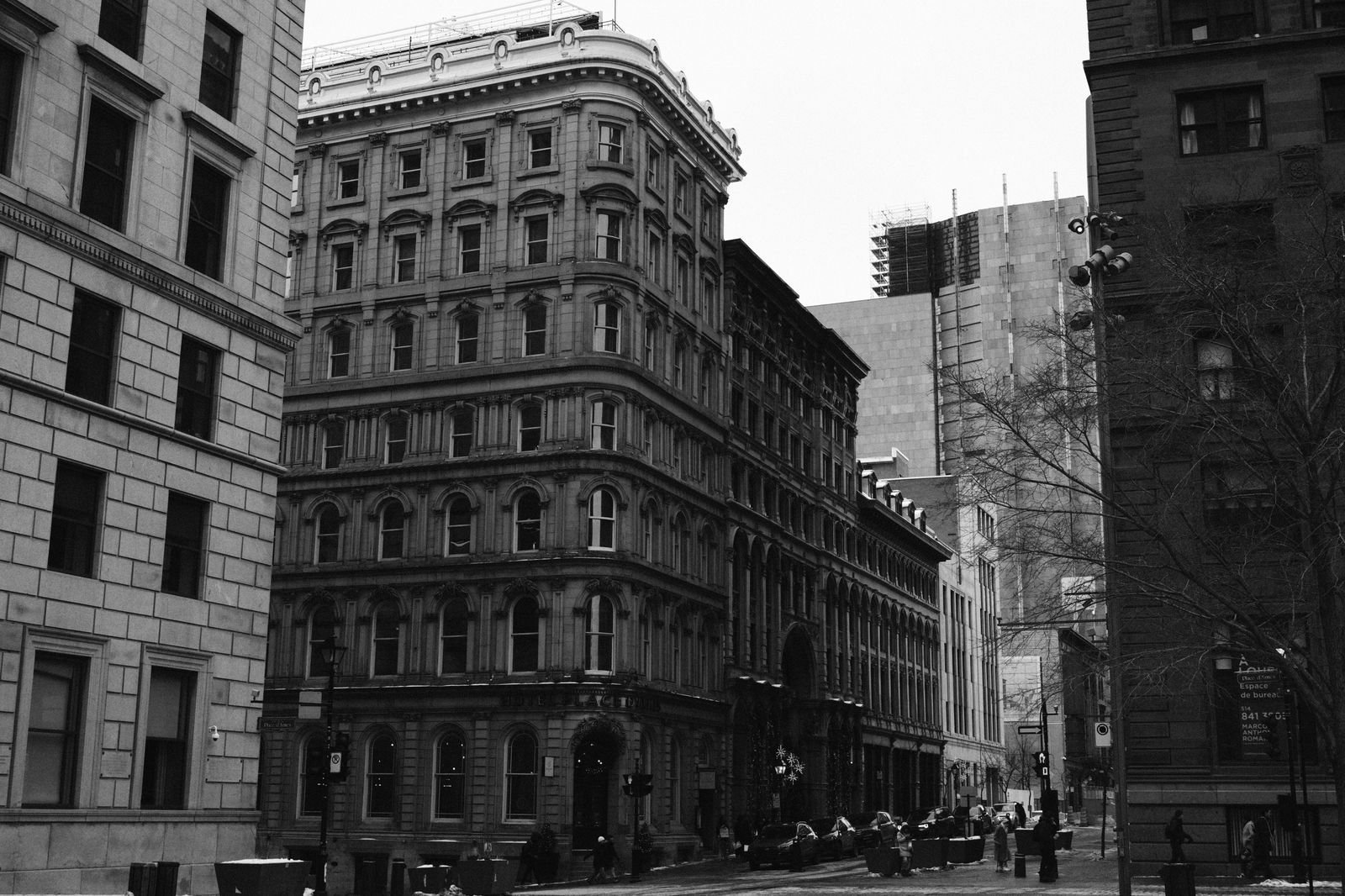
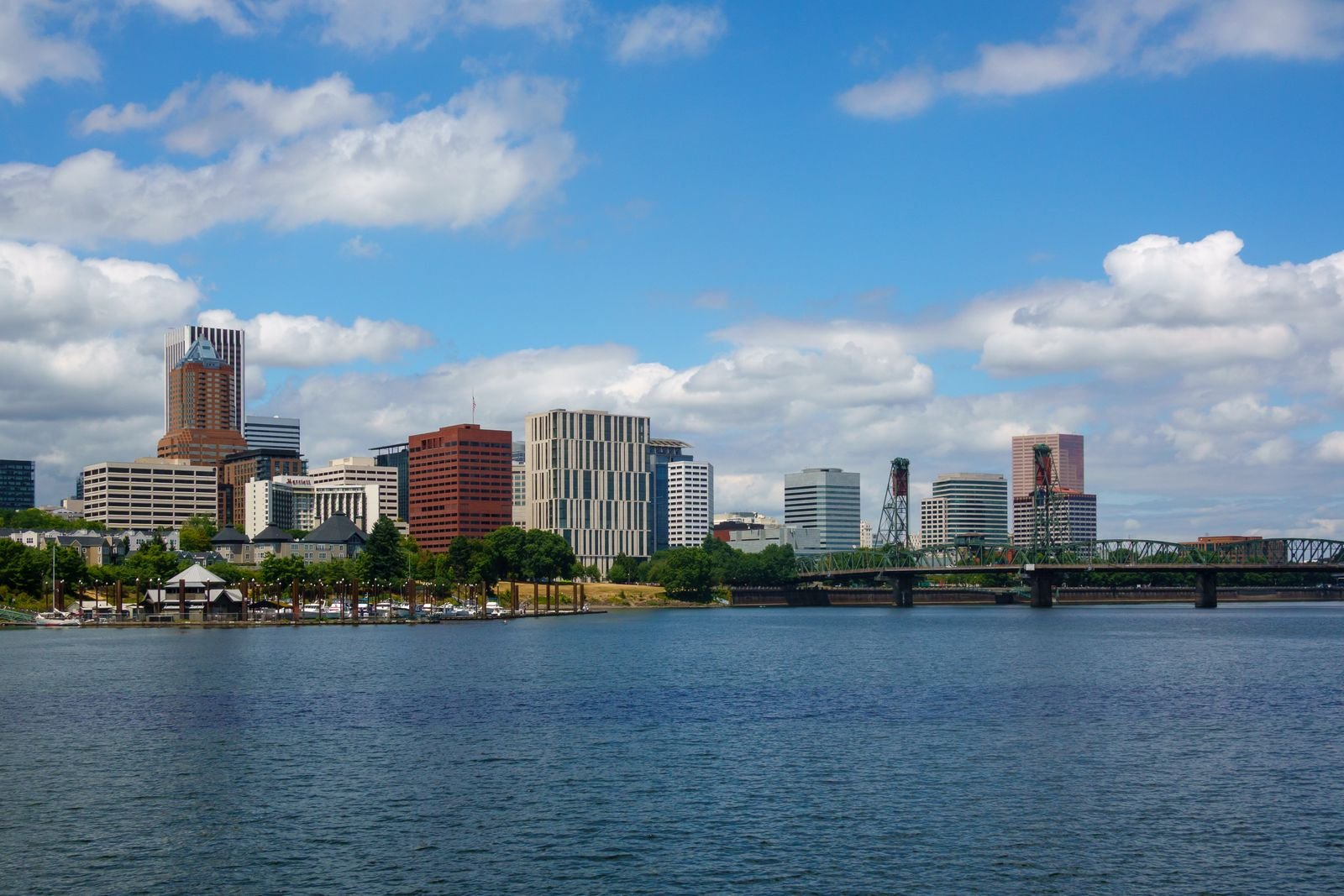 1901
Today
Drag the handle to compare 1901 and Today.
Most cities put their statues in parks. Portland put one in a traffic lane and then spent a century driving around it.
The Thompson Elk Fountain belongs to the middle of SW Main Street, in the single block between SW 3rd and SW 4th. If you have ever driven toward the Hawthorne Bridge from downtown you know the move: the lane splits, you pick a side, a very large bronze animal passes your window at shoulder height, and the lane comes back together. Nobody planning a street today would allow it. That is precisely why people love it.
Use the slider above to compare the block in 1901, a year after the elk went up, with the downtown we have now. The 1901 view comes from the City of Portland archives.
A gift from a former mayor
The fountain was presented to the city in 1900 by David P. Thompson. Thompson had been mayor of Portland around 1880, and before and after that he was a surveyor, a banker, a territorial governor of Idaho, and a diplomat. He was also active in the Oregon Humane Society, and that last detail explains the whole object.
This was never meant to be a monument to elk. It was a drinking fountain for animals. The granite base carries broad stone basins set at the right height for horses, with smaller troughs lower down for dogs. In 1900 a horse hauling a wagon up from the waterfront needed water, and the middle of the street was where the horses were.
The elk on top was the decoration. Thompson hired Roland Hinton Perry, an East Coast sculptor who had recently made the big Neptune fountain in front of the Library of Congress. The story usually told is that elk once grazed the ground where downtown now stands, and the statue was a nod to them.
The Elks were not impressed
The local Elks lodge, you would think, would have been delighted. By most accounts they were not. The lodge is said to have declined to take part in the dedication because members found the animal anatomically wrong, and one phrase that has been repeated ever since is that they considered it a monstrosity of art.
They had a point. The neck is long, the body is a little lean, and the antlers do a lot of the work. As sculpture it is, to be honest, fairly unremarkable. As a landmark it is unbeatable, and those are different things.
The squares on either side
The elk stands between two of the oldest public spaces in the city. Lownsdale Square is to the north and Chapman Square is to the south. Together with the block beyond them they are known as the Plaza Blocks, set aside in the early 1850s when Portland was a few muddy streets and a lot of stumps.
Each square has its own character:
- Chapman Square was once reserved for women and children. It is the one with the ginkgo trees, which turn a ridiculous yellow for about a week every autumn.
- Lownsdale Square was the gentlemen’s gathering place, which in practice meant speeches, arguments, and loitering. It holds the Soldiers Monument, a granite shaft honoring Oregon volunteers of the Spanish American War.
Both squares and the fountain are on the National Register of Historic Places. That listing is the reason the elk was still in the road at all.
Why it never moved
Once automobiles took over, the fountain became an obstacle with a pedigree. There were repeated suggestions over the decades that it be shifted into one of the squares, a few yards either way, where it would stop inconveniencing motorists. Each attempt went nowhere. People objected, the proposal was shelved, and the lanes kept bending.
Then came the one way grid. Around the middle of the twentieth century Portland converted its downtown streets to alternating one way traffic, and SW Main was assigned to carry cars east toward the bridge. The elk faces east. The result is that for some seventy years every driver on Main has approached the statue from behind and been presented with its hindquarters.
Thompson, a man who presumably wanted his gift admired, might have had a view on that. I find it rather fitting. Portland has a talent for getting the big gesture right and the orientation wrong.
Then and now
In the 1901 photograph the fountain is the tallest thing in the foreground. The street around it is wide and nearly empty, the trees in the squares are young, and the buildings behind are a few stories of brick and stone. You can see what the basins were for.
By 2011, when I took the matching photo for the original version of this post, the trees had swallowed both squares, the Multnomah County Courthouse and the federal buildings boxed in the block, and the troughs held water that no horse had touched in generations. The elk itself looked exactly the same. That was the charm of the comparison: everything moved except the animal.
The part I did not expect to write
It did eventually move, though not by anyone’s plan. In the summer of 2020, during the long run of protests around the nearby Justice Center, fires were set repeatedly at the base of the fountain. The granite cracked and spalled, and the city lifted the bronze off its pedestal and trucked it to storage for safekeeping. The basins were hauled away after it.
For a while the block had nothing in it but a patch in the pavement, and it turned out that Main Street looked wrong without something to steer around. The city has since committed to bringing the elk back to its original spot on a rebuilt fountain. Public art schedules being what they are, I would check on progress before promising anyone a photograph.
So after a century of failed attempts to relocate it, the elk left on its own terms, and the main thing Portland learned was that it wanted the obstacle back.
Seeing the block for yourself
Go on foot. Drivers have always had the worst view.
- Start on SW 4th at Main, by the old courthouse, and walk east down the middle of the block along the edge of Chapman Square.
- Stand on the 3rd Avenue side and look back west. This is the front of the elk, and the angle of the 1901 photo.
- Cut through Lownsdale Square to see the Soldiers Monument, then loop back through Chapman for the ginkgos if it is late October or early November.
From there it is a few blocks downhill to the river, where the changes have been considerably larger. I covered those in Portland Then and Now: Downtown Waterfront.
- portland
- thompson elk fountain
- downtown portland
- chapman square
- lownsdale square
- public art
- portland history
- then and now