Portland Weekend Getaways: Mt. Rainier National Park
I am biased toward Oregon's mountains, but Rainier is in a different weight class. Notes on Sunrise, Paradise, the wildflower season, and the drive from Portland.
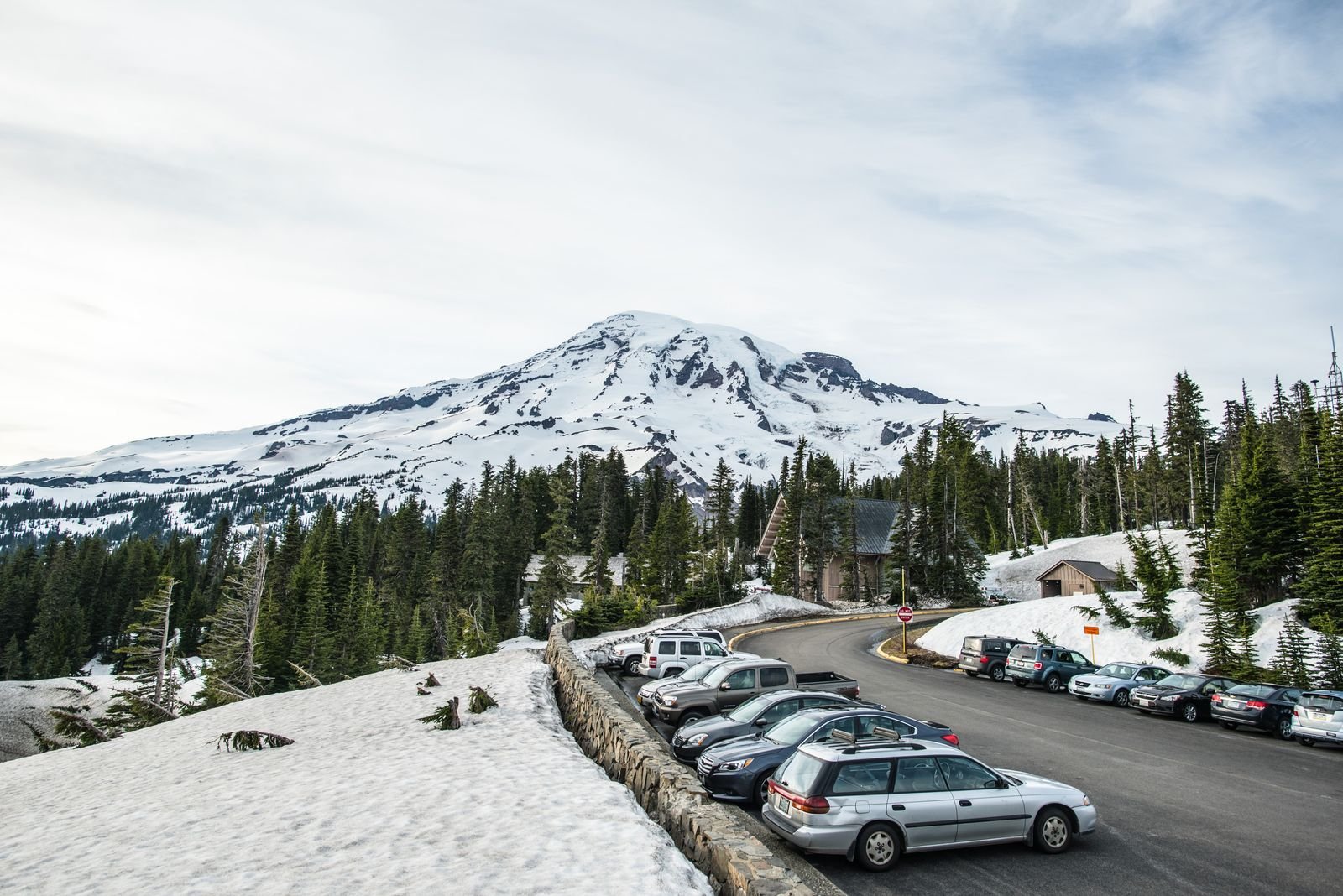
I love Oregon, and I will defend Mt. Hood against all comers. But one of the quiet advantages of living in Portland is that Washington’s scenery is ours to borrow, and the biggest thing on loan is Mt. Rainier.
On a clear day you can pick it out from the right hilltop in Portland, a pale lump on the northern horizon well beyond St. Helens. That view tells you nothing. Rainier rises a little over 14,400 feet, the tallest peak in the Cascades, and carries more glacial ice than any other mountain in the lower 48, some two dozen named glaciers in all. It became a national park in 1899, among the first in the country. You do not really grasp the scale until you are standing at its feet with your neck bent back.
Two ways in from Portland
The park has several entrances, and for a Portlander two of them matter.
To Paradise (south side): I-5 north to Exit 68, then US 12 east to Morton. Turn north on Highway 7 to Elbe, then east on Highway 706 through Ashford to the Nisqually entrance. From the gate it is a slow, lovely climb past Longmire to Paradise. Figure two and a half to three hours from Portland.
To Sunrise (northeast side): Stay on US 12 east through Packwood, turn north on Highway 123 over Cayuse Pass, and pick up Highway 410 to the White River entrance. This is about a four hour drive, which makes it an overnight trip, or better yet a three day weekend.
In summer the Stevens Canyon Road links the two sides, so you can go in one way and out the other.
Sunrise and the Burroughs
The Sunrise Visitor Center sits at 6,400 feet above the White River valley, the highest point in the park you can reach by car. It is generally open from early July through late September, weather permitting. The view from the parking lot would be the main attraction anywhere else: the whole east face of the mountain, with the Emmons Glacier pouring down the middle of it. The Emmons is the largest glacier by area in the contiguous United States, and from here you can make out individual crevasses.
The better views go to those willing to walk. I recommend the Burroughs Mountain hike. The trail climbs past Frozen Lake (accurately named well into summer) onto a high, bare plateau that feels more like arctic tundra than the Cascades. First Burroughs puts you about a thousand feet above the visitor center. Second Burroughs is a bit higher still, and it is about as close to the mountain as you can get without a rope and an ice axe. Below you the White River runs gray with glacial silt, past a small lake of an improbable turquoise.
A few practical notes:
- Snow lingers on this trail into July. If a steep snowfield blocks the path and you are not equipped for it, turn around.
- There is no shade and no water. Bring both, in the form of a hat and a full bottle.
- Stay on the trail. The tundra plants up here take decades to recover from a boot print.
On the drive up, stop at Sunrise Point, the big hairpin a few miles below the visitor center. Looking south you can see Mt. Adams, and on a good day Hood beyond it, which is a pleasant reminder of home.
Sunrise has long been the quieter side of the park. That is relative. You will not be alone, but you are less likely to be trampled.
Paradise and the wildflowers
Paradise is the famous one, at about 5,400 feet on the south slope, and it earned the name honestly. The story goes that an early visitor saw the meadows in bloom and said it looked like paradise, and nobody since has argued.
The bloom is the reason to come. For a few weeks, usually from late July into mid August, the subalpine meadows fill with lupine, paintbrush, bistort, and the white avalanche lilies that push up at the edge of the melting snow. Timing varies with the winter. Paradise is one of the snowiest places in the country, and in a big year the drifts hang on past the Fourth of July.
What to do there:
- Myrtle Falls: a short paved walk from the Paradise Inn to the classic waterfall with mountain view. Everyone takes this photograph. Take it anyway.
- Skyline Trail: a loop of roughly five and a half miles up to Panorama Point, with the Nisqually Glacier on one side and, on a clear day, Adams, St. Helens, and Hood lined up to the south.
- Paradise Inn: a big timber lodge from 1917. Even if you are not staying, walk through the lobby.
- Reflection Lakes: a few miles east on Stevens Canyon Road. Go early, before the wind ruffles the water.
The meadows are fragile and the Park Service has spent decades repairing the damage from people wandering off trail for a better picture. Do not be that person.
When to go
A trip to Rainier is a bet on the weather. Even on a cloudless summer morning the mountain can manufacture its own clouds by noon and vanish behind them. I have seen visitors stand in the Paradise parking lot looking at a wall of gray, unaware that there was a 14,000 foot volcano directly in front of them.
The best odds, for both clear skies and thinner crowds, come early on a weekday in late July or early August. Arrive at the gate by eight if you can. On summer weekends the lots at both Paradise and Sunrise fill by late morning. The park has also tried timed entry reservations in recent summers, and the details keep changing, so look it up before you go.
September is the underrated month. The flowers are done, but the huckleberry leaves turn red, the bugs are gone, and the light is better.
Where to stay
- Inside the park: Paradise Inn and the National Park Inn at Longmire, both of which book up far ahead. Campgrounds at Cougar Rock, Ohanapecosh, and White River.
- Outside: Ashford for Paradise, Packwood for either side. Packwood has motels, a grocery, and a resident elk herd that wanders through town as it pleases.
If you come home wanting more of Washington, the next step up in ambition is a loop around Olympic National Park. It has fewer glaciers and a great deal more moss.
- mount rainier
- weekend getaways
- washington
- paradise
- sunrise
- wildflowers
- hiking
- national parks