Escaping the Portland Winter: A Road Trip Week in the Dominican Republic
When the Portland sky goes grey for the fifth month running, the Caribbean dry season is at its best. One week, one car, and the east coast of the Dominican Republic.
Around the second week of January, Portland stops pretending. The holiday lights come down, the sky settles at the color of a wet sidewalk, and the forecast becomes one icon repeated seven times.
I like the rain more than most people I know. I own three jackets for three kinds of it. But the numbers are what they are: the airport gauge collects about 36 inches in an average year, and the National Weather Service puts nearly 90 percent of that between mid October and mid May. By February even the moss looks tired.
So last winter we did the thing Portlanders talk about at parties and rarely book. We flew to the Dominican Republic, picked up a car, and spent a week driving the east end of the island. These are the notes I wish I had been handed before we left.
Why the calendars line up
The Caribbean runs on the opposite schedule from ours. The Atlantic hurricane season officially covers June 1 through November 30. After that the east coast of the Dominican Republic settles into its dry season, which runs roughly from December into April. Afternoons sit in the low 80s, the trade wind keeps the humidity honest, and a shower, when one comes, tends to be over before you have found your hood.
Put that next to a Portland winter and the overlap is almost rude. Our worst stretch is their best. The catch is that everyone else in the northern half of the continent has noticed the same thing, so Christmas week, Presidents Day and spring break are the crowded and expensive windows. The quiet weeks of January and early March treated us better.
One more gift for the body clock. The Dominican Republic keeps Atlantic Standard Time all year, four hours ahead of Portland in winter. You wake up early without trying, which is exactly when the beaches are empty and the roads are calm.
Getting there from PDX
Plan on a connection. From Portland you will almost always change planes at a larger hub somewhere east or south, and the eastbound leg is often an overnight one. It is a long travel day, comparable to going to Europe, and I would not try to do anything ambitious on the first afternoon.
Two pieces of paperwork matter. Every traveler fills in the Dominican e-ticket, a free online entry and exit form that gives you a QR code to show at the airport, and you need it again for the flight home. Do it on the official government portal, since plenty of lookalike sites will happily charge you for a free form. The other piece is your Oregon licence, which is all you need to drive on a short tourist visit, together with your passport.
We did the week with a rental car collected in Punta Cana the morning after we landed, and that one decision turned a resort stay into an actual look at the country. The resort zone is built so that you never have to leave it. That is precisely the reason to leave it.
What driving there is actually like
Traffic keeps to the right, the cars are left hand drive, and distances are posted in kilometers. That is where the similarity to a run down Highway 26 ends.
The highways
The main roads in the east are better than I expected. The Autopista del Coral runs west from the Punta Cana airport area past Higüey to La Romana, where it meets the Autovía del Este, the highway that continues along the south coast toward Santo Domingo. Both are divided, well surfaced and fast. Both are toll roads, and so is the Boulevard Turístico del Este that links the airport with the Bávaro hotel strip and the coast north of it.
Tolls are paid at booths in Dominican pesos, so keep a stack of small bills in the door pocket. Do not count on a card or on dollars. If your car has an electronic tag on the windshield, ask at pickup whether it is active and how it gets billed.
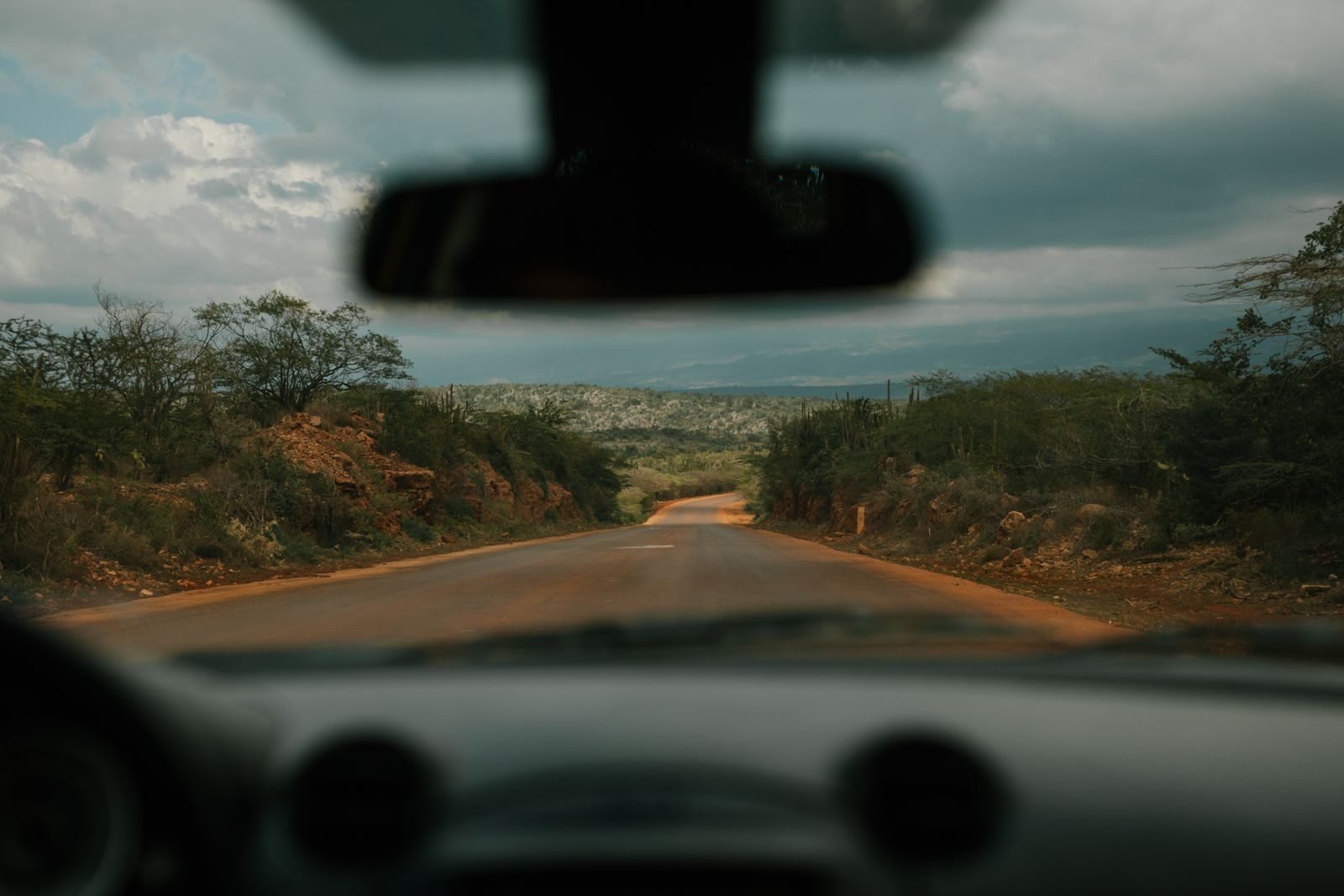
Everything that is not a highway
Off the toll roads the rules get looser. A few things I learned in the first two days:
- Motorbikes are the real traffic. Small bikes, many of them working as taxis called motoconchos, pass on either side, carry three people or a propane tank, and often run without lights. Check both mirrors before every turn, including right turns.
- Speed bumps are everywhere and rarely announced. Every village has several. Hitting one at highway speed is a mistake you make once.
- The horn is a courtesy. A short tap means "I am here" or "I am passing". Nobody is angry at you.
- Do not drive at night if you can help it. Unlit bikes, pedestrians, dogs and the occasional cow share the shoulder. We planned every day to be parked by sunset, which in winter comes a little after six.
- Download offline maps. Coverage is good near the coast and patchy inland, and road signs can be thin on the ground.
Gas stations will make an Oregonian of a certain age feel at home, because an attendant pumps the fuel for you. Stations on the main roads generally take cards. Carry pesos anyway.
At the rental counter, read what the insurance covers and what the deductible is before you sign, then walk around the car and photograph every scratch with the agent standing there. It takes five minutes and saves an argument on the last day.
A loose seven days
None of the drives on this loop is long. The whole point of the east is that the Atlantic coast, the inland farm country and the Caribbean coast sit within about an hour of each other. Before the trip I sketched the order of days with the help of a Punta Cana travel guide written by people who live there, then let the weather and our mood rearrange it. This is roughly how it shook out.
| Day | Where | What we did |
|---|---|---|
| 1 | Punta Cana | Landed, checked in, walked the beach, slept ten hours. |
| 2 | Bávaro | Picked up the car, bought water and fruit at a supermarket, practiced on local roads. |
| 3 | Macao | Morning on the public beach north of Bávaro, fried fish for lunch, back before dark. |
| 4 | Higüey | Inland to the basilica and the market, home through cane and cattle country. |
| 5 | Bayahibe | Across to the Caribbean side, two nights in the village. |
| 6 | Bayahibe | Boat day toward Isla Saona, or simply the calm water at the town beach. |
| 7 | Back east | Slow return on the Coral highway with a stop in La Romana, car returned, bags packed. |
Bávaro and Punta Cana
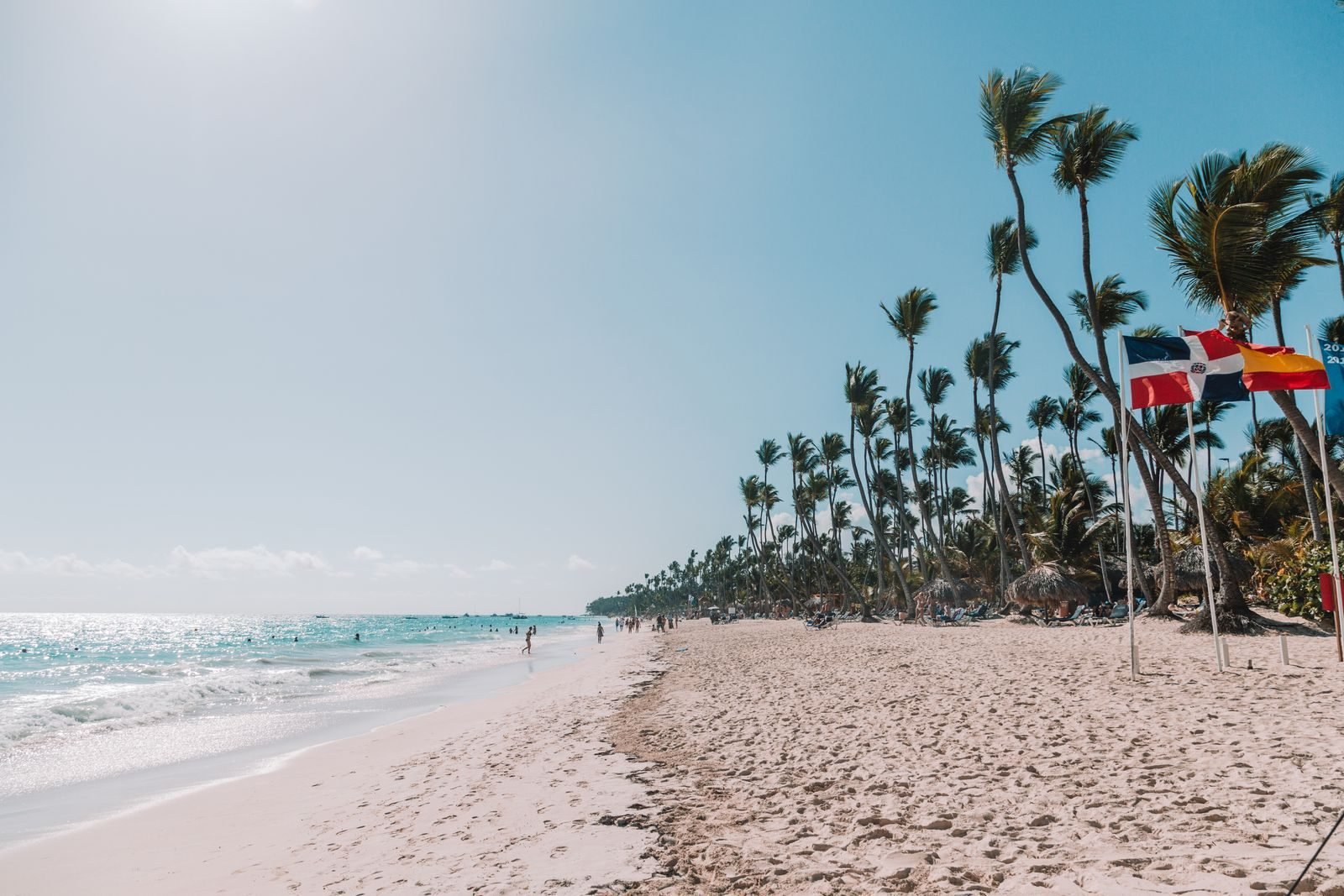
This is the famous stretch: a long run of pale sand backed by coconut palms and one hotel after another. It is busy and it is built up, and the water really is that color. We used it as a base for the first half of the week and did our exploring from there. On the slow second day we also walked the freshwater lagoons of the Ojos Indígenas reserve, a small forest preserve near the airport that charges admission and makes a good antidote to a day of salt and sun.
Macao
Macao is a wide public beach a short drive north of Bávaro, on the open Atlantic. It has surf, a couple of surf schools, and a row of simple places selling fried fish and cold beer with your feet in the sand. Tour buggies arrive in dusty convoys around midday, so go early. The waves here are real, and I would watch children closely.
Higüey
Higüey is the capital of La Altagracia province and feels nothing like the coast. It is a working Dominican city with traffic to match. The reason to come is the Basílica Catedral Nuestra Señora de la Altagracia, a concrete church inaugurated in 1971 whose tall pointed arch is visible long before you find parking. Pilgrims come from all over the country, above all on January 21, the feast day of the Virgin of Altagracia. Dress modestly, with shoulders and knees covered, and avoid that date unless a very large crowd is what you came for.
Bayahibe
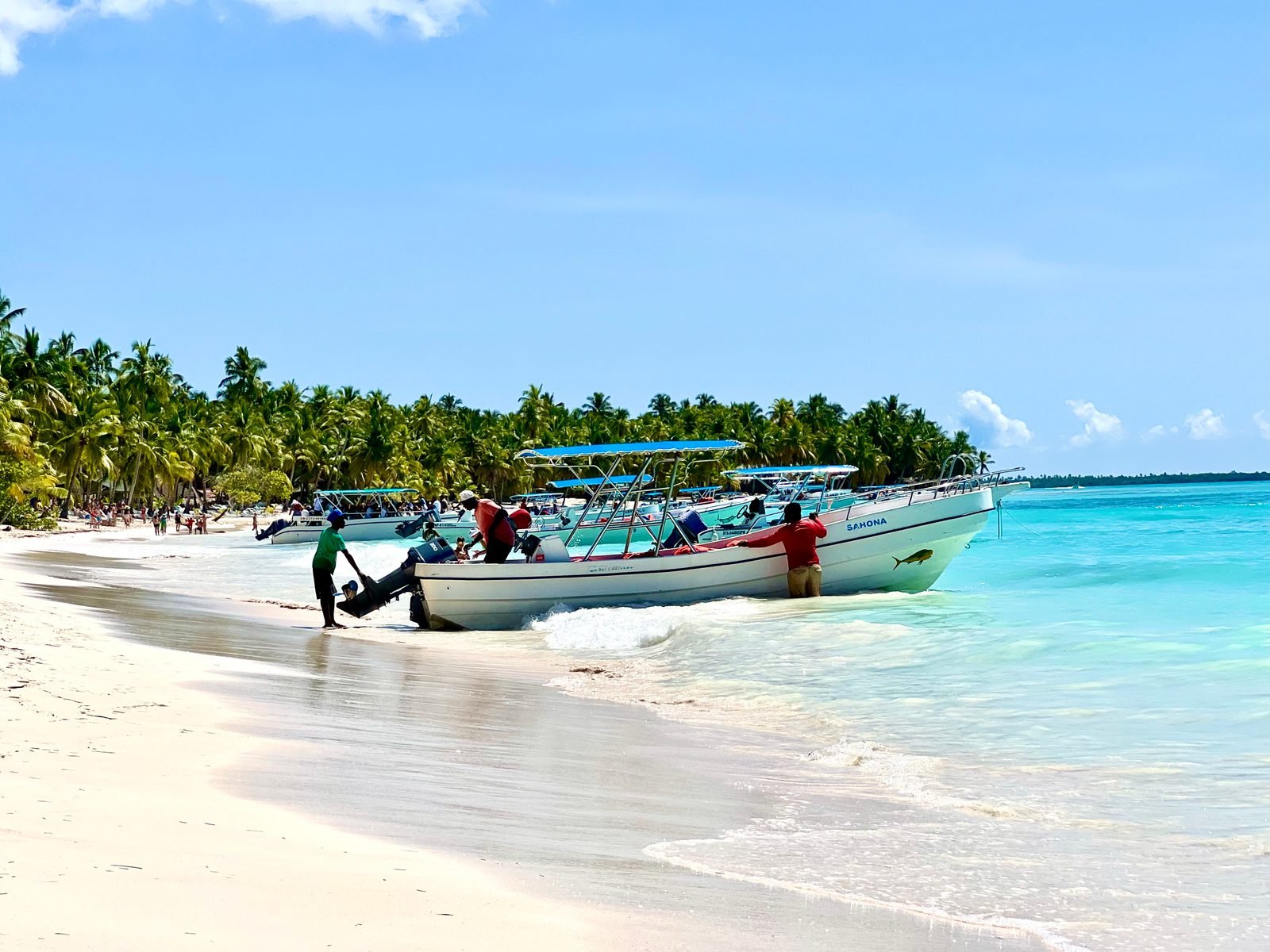
Bayahibe sits on the Caribbean side, and the difference shows the minute you see the water. It is flat, clear and sheltered, the opposite of Macao. The village is still partly a fishing town, with a small harbor full of boats that leave each morning for Isla Saona and the coast of Cotubanamá National Park. Those trips are crowded. We enjoyed the evening more, when the day boats were back and the whole waterfront turned to face the sunset.
On the way back we stopped above the Chavón River at Altos de Chavón, a replica of a Mediterranean hill village built of coral stone near La Romana. It is an odd thing to find in the Caribbean, and worth an hour for the view down the river gorge alone.
What a Portlander packs differently
My packing instincts were wrong in almost every direction. Some corrections:
- Sun protection, seriously. Punta Cana sits near 18 degrees north. Portland is at 45. Skin that has not seen daylight since October burns in the time it takes to order lunch. Bring a hat with a brim, a long sleeved swim shirt and more sunscreen than seems reasonable.
- One light shell, not the whole collection. A packable rain jacket handles the rare shower and the cold cabin on the flight. The fleece can stay home.
- Polarized sunglasses for driving. The glare off pale concrete at noon is fierce.
- A phone mount and a charging cable. You will be reading a map constantly, and you want both hands free for the motorbikes.
- Insect repellent for dusk, especially near mangroves and lagoons.
- Sandals that can get wet, and one pair of closed shoes for town.
- Light long clothing for the basilica and for evenings.
As for coffee, leave the hand grinder at home. Dominican coffee is grown in the mountains in the middle of the island and is usually brewed strong in a stovetop moka pot, which everyone there calls a greca, then served sweet in a small cup. It is not a Portland pour over and does not want to be. A bag of local beans from the supermarket was the best souvenir we brought back.
Coming home
We landed at PDX after dark, in drizzle, and I did not mind it. That is the real argument for a week like this. It is not about quitting the Northwest winter. It is about breaking it in half, so the second half feels like something you chose.
The season still has plenty to offer once you are back and thawed out. I would take Pittock Mansion on a clear cold morning over most summer views, and the rain is the whole reason to visit the rain forest valleys of Olympic National Park. Some things do have to wait, like the gated summit road up Larch Mountain, which stays closed until the snow goes. A week of sun in the middle makes the waiting easier.
- winter travel
- dominican republic
- punta cana
- road trip
- portland winter
- pdx
- getaways